

Member Spotlight: Dr. William Rice
Meet Dr. William Rice
Executive Director of ACES
Biography
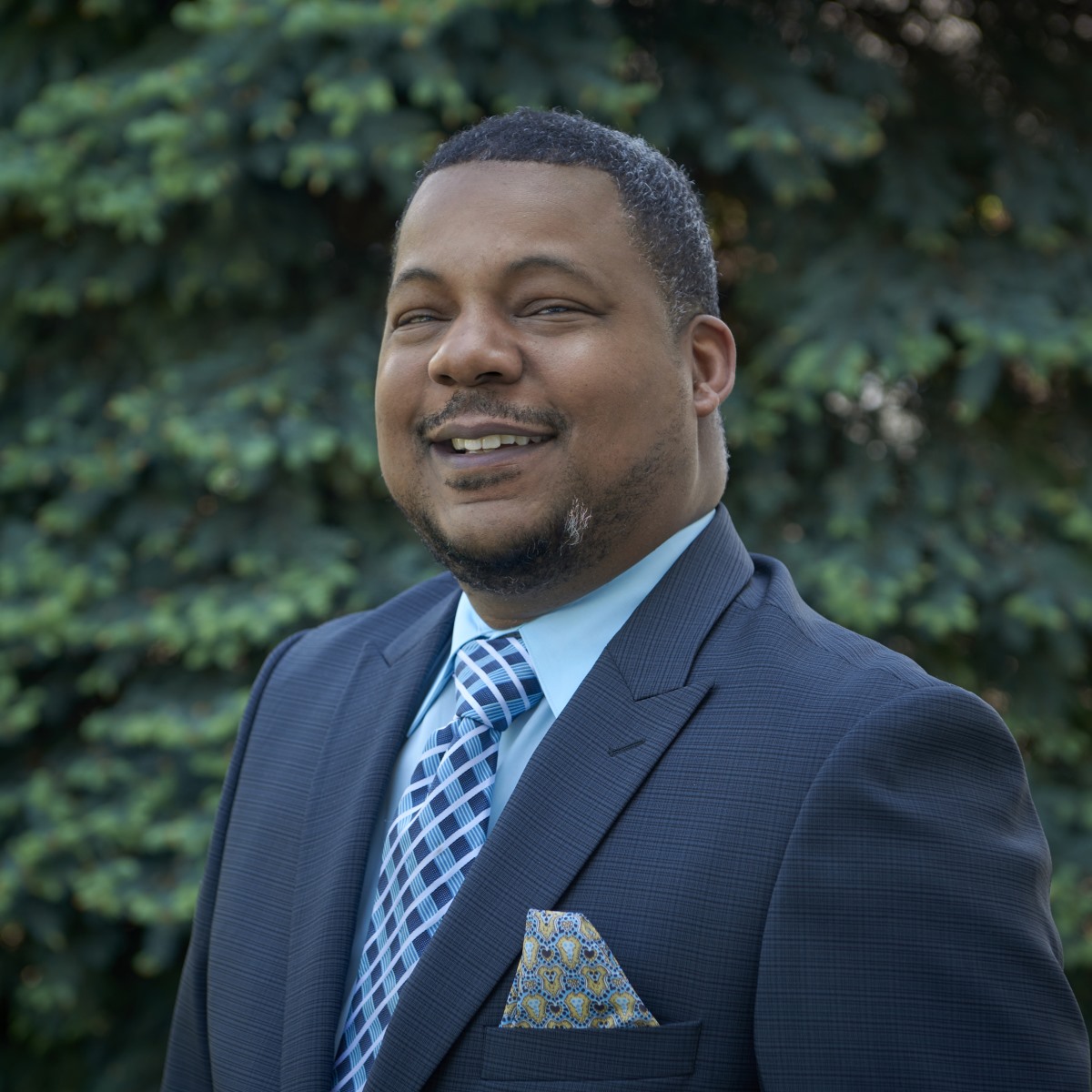 At the beginning of July, Dr. William Rice was appointed to the role of Executive Director at ACES (Area Cooperative Educational Services) in New Haven, Connecticut, after having served as Assistant Executive Director for the past nine years. He first joined ACES in 2015 as Director of Curriculum and Instruction.
The path that led to ACES:
Good fortune in his early days of school laid the groundwork for what has blossomed into a long and meaningful career in education. Rice describes being called to the principal’s office in high school, where he learned that an anonymous staff member had recommended him for the school’s magnet program. This experience prepared him to earn a college degree in chemical engineering.
Then during his first job at Uniroyal Chemical, Rice volunteered to coach for the same football program that he had played in during his youth, the Bridgeport Pop Warner Raiders, which drove home the important realization that one adult taking an interest in a young person can completely change their life’s trajectory: “I kept thinking to myself, I don't want these kids to go to their school and not be able to have anybody like that or run into somebody like that, and so I started the career change process and to get a master's degree in teaching.”
The principal of his former magnet school was the person who gave him his first teaching position, which eventually led to a career in school administration and the past 11 years at ACES. “A big part of my ‘why?’ is I think I really wanted to be that person in a student's life that would be able to see the potential in them.”
What ACES provides:
ACES (Area Cooperative Educational Services) is a regional educational service center that supports 25 school districts in south-central Connecticut. It operates magnet schools, special education facilities, and adult transition programs. “In addition to those,” Rice says, “our initial work was in special education, creating specialized programs for students. So we have probably about eight of those now that are center based, and then we have a number of them where we work in collaboration with a school district to provide services closer to their space…We service the entire spectrum from pre-K to 22: autism, cognitive challenges, social emotional dysregulation at the most severe level. And we we pride ourselves on ensuring that those students' worth is visible to everybody…We structure our programs, our center-based programs, like schools, because we find that the families are looking to touch as much normalcy as as they can in terms of their experience of what school could look like. And so there's proms and activities and all that stuff like that. Everyone has a dream for their student. It just looks different, and at ACES, we ensure that every student that we we touch has the requisite things that they need. To make that dream come true for them and their family.”
The biggest challenge as an autism service provider:
“I'm focused on trying to build narratives around the impact of the services and the work that we do with with the students on the spectrum. A significant number will be nonverbal and not be able to demonstrate progress in the traditional ways that folks look for progress. I don't believe it is enough to just say those metrics don't work for our kids, and so we’ve got to be able to identify the metrics that do work, and it will look different. It'll probably be much more like a narrative, but we need to be able to tell that narrative and demonstrate those things. It's hard to help somebody understand the importance of a goal of just being able to have a student go out to a restaurant and make it through the hors d'oeuvres, or just to be able to manage a teeth cleaning…So in a lot of ways, it's incumbent upon us to be able to articulate those importances, so that other people [who are not] involved with the student on a day-to-day basis can understand the value of the work that those folks are doing each every day.”
There is also the challenge of tracking progress over long periods of time, when the traditional school system expects something faster. “Sometimes [progress] won’t manifest itself in the same time frames,” Rice says, “but when you have a student that you had over long periods of time, and the teachers and the staff are telling you this kid came in not having one word, and and now, four years later, they're articulating through an AAC device, you [now] know their needs and wants. Because we the likelihood is that there will be some type of managed care in that student's future, and we really just want to make them as independent as possible, so they can communicate needs to the the best of their ability to help folks understand the significance of that, when the majority of students in the school districts are you know typical learners.”
The benefits of a CASP membership:
“It's great to have kind of this professional outlet to be able to support the work that work that we do. We're we're working to try to find more ways to connect as we try to understand and figure out ways to see what else is out there, in terms of folks being able to support the articulation of progress, or new ways to be able to engage with students and families, or trying to figure out new innovative ways for transition programming…So the more and more that folks continue to have those conversations in a space with like-minded educators, I think it's going to bring the value of our relationship with CASP.”
What matters most:
“The work is not easy work, and a lot of times, unfortunately, it gets conflated with with care and cost, and then you have a number of folks from the outside not really seeking to understand the true challenges of the work…I go through the building and see staff, and they're greeting me with smiles on their faces, but they're putting on their huge armbands to protect themselves from bites. This is a normal day at the gig. So what I want people to know about myself, and I think much more about ACES, is that we're committed to that work, and committed to engaging into the challenges and providing narratives to help folks who are involved in the work on a daily basis understand its impact and its value.”
What happens after work:
Rice admits that it’s hard to disconnect from work, but when it’s time to go home, he values spending time with his family and finding pastimes that contribute to a “Zenful peace,” even if it’s just sitting still with his thoughts.